Saturday, May 9, 2015


Mother love along with storytelling is fundamental to evolution

May 9, 2015
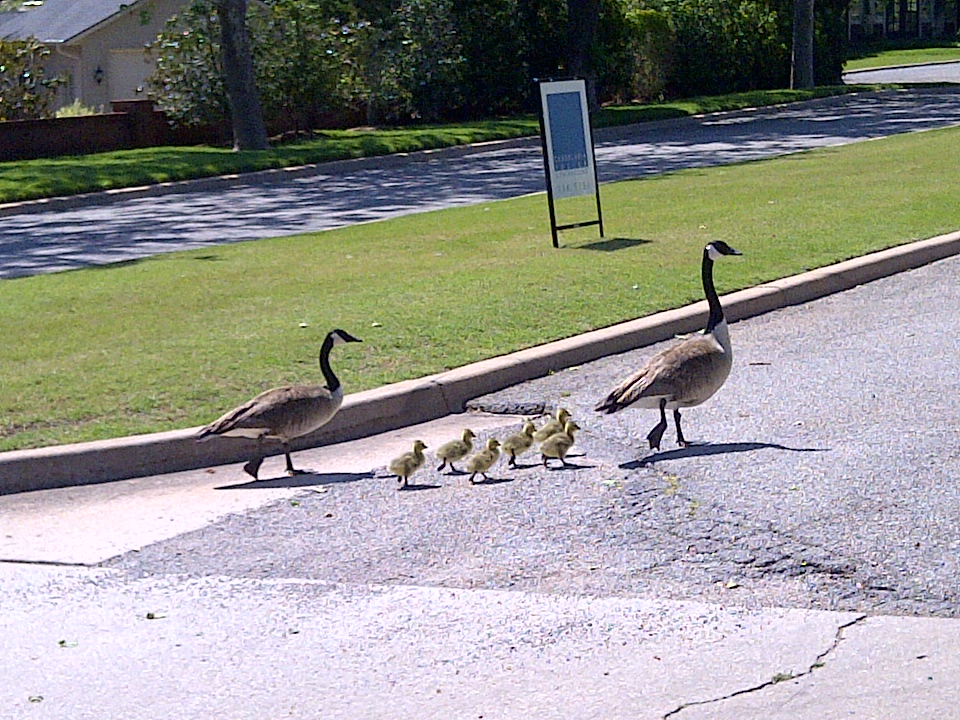
Make Way Ducklings
Mother’s Day celebrates the love between mothers and their children. I recently read a bold statement that put mother love in the context it deserves, Mother love, along with storytelling is fundamental to evolution. Attachment, the core of a mother’s love for their child, nurtures a child’s development of self and allows them to thrive and eventually go out into the world and be their best self.

Mother Nature, in her wisdom, knows to imbue Mothers with an enormous amount of generosity. I believe an infinite spirit of generosity drives how mothers love their children and is behind what we refer to as mother’s intuition. We love our children and at the same time we raise them to become independent and leave the nest. On its own, this calls for an enormous amount of generosity.

Kahil Gibran, the Lebanese-American poet captures this sentiment in his poem On Children
I quote here a few passages.
Your children are not your children.
They are the sons and daughters of Life’s longing for itself.
They come through you but not from you,
And though they are with you yet they belong not to you.
You may give them your love but not your thoughts,
For they have their own thoughts.
You may house their bodies but not their souls,
For their souls dwell in the house of tomorrow,
which you cannot visit, not even in your dreams.
You may strive to be like them,
but seek not to make them like you.
For life goes not backward nor tarries with yesterday…


No truer words were ever written and mothers the world over know the challenges inherent in this type of mother love.

The challenge for parents, want the best for your child, but not for your child to be the best.

Push, Don’t Crush (NYT Sunday Review 4.24.15) speaks to the disturbing phenomena of suicide clusters existing in high achieving communities. Although such clusters are rare, their existence gives pause and urges parents to do some soul searching. The pressure to succeed does not in itself cause suicide but the language we use to communicate our hopes and expectations for children begs our attention.

Parents say, ‘All I care about is that you’re happy,’ and then the kid walks in the door and the first question is, ‘How did you do on the math test?’ ” Ms. Levine said. “The giveaways are so unbelievably clear.”

Denise Pope, an education expert at Stanford, calls this gulf between what people say and what they mean “the hidden message of parenting.” Ms. Pope said that children are picking through the static to hear the overriding message that only the best will do — in grades, test scores, sports, art, college. “In everything,”

One solution, said Ms. Pope of Stanford, is “downtime, playtime, family time.” For parents, too. In other words: Take a leap of faith (well supported by science) that downtime will lead to a healthier perspective.

I believe the challenge for parents is to want the best for your child, but not for your child to be the best. Reading for pleasure could be one of the most rewarding activities to put into “downtime” and just might be an antidote to the exorbitant expectation to succeed that children suffer from. Reading fiction builds empathy and compassion for the self and others. The best of stories introduce us to the one character we might recognize, but are not always eager to know better, ourselves.


Reading fiction gives a person the opportunity to know who they are and discover what is of importance. This is what will help children be their best selves become free from the thankless and unattainable goal of being the best.

Thursday, April 23, 2015

Oski from UC Berkeley is a fan of Shakespeare!

Shakespeare, who would be 450 years old today, is considered the single most influential writer in English. He coined over 1700 words by changing nouns into verbs, changing verbs into adjectives, connecting words never before used together, and devising words wholly original.

Do you realize how often you quote Shakespeare? Here are some of the expressions you might use in your everyday speech.

The world is your oyster, being in a position to take advantage of life’s opportunities
Catch a cold, meaning,to get sick

It’s all Greek to me,meaning something is indistinguishable or incomprehensible
Love is blind,inability to see shortcomings in a lover
Wild goose chase,meaning a hopeless and never-ending pursuit
A heart of gold,meaning a very kind or honorable person
Break the ice,meaning to start conversation
Laughing stock,meaning, a person subjected to ridicule
Wear your heart on your sleeve,meaning to express you emotions openly
Method to his madness, meaning someone’s strange behavior has a purpose
Green-eyed monster, when speaking of jealousy
In a pickle, when you are in a difficult or uncomfortable situation

It is a sad sate of affairs that just 4 of the top 52 top-ranked universities require English majors to take a course on Shakespeare. I am proud to say UC Berkeley is one of the four.

Thursday, April 16, 2015

Our humanity needs the humanities.

A recent NYT article, Starving for Wisdom beautifully highlights what we have known since
 Homer— of the importance of a close marriage between the sciences and humanism— “science depends upon the humanities to shape judgments about ethics, limits and values.”

The study of humanities, and here I focus on literature, enrich a person’s soul. As the poet, William Carlos Williams said

It is difficult to get the news from poems

yet men die miserable every day for lack

of what is found there.

If the enrichment of our soul is not enough reason to read literature, let us be aware that much of our happiness depends upon our interactions with those around us, and evidence increasingly tells us that literature nurtures a richer emotional intelligence. Literature builds bridges of understanding of others and helps readers better know themselves.

An important read that furthers our thinking about the importance of the humanities is Fareed Zakaria’s book, In Defense of a Liberal Education. He brings to life what E. O. Wilson said,

We are drowning in information, while starving for wisdom.

Sunday, April 12, 2015

Don't burden poetry

A poem is a magical arrangement of words
that delivers feelings. It is not a test.

Poetry and music speak directly to your heart.
When listening to a piece of music,
the melody and the lyrics wash over you,
You find yourself in a particular mood.
You would not think to analyze how that happened
So why burden a poem with such a thought?

The only question to ask of a poem
is not "What did the poem mean?" but
rather, "What mood does the poem deposit
into your heart?"

To You   By Karla Kuskin

I think I could walk
Through the simmering sand
If I held your hand.
I think I could swim
The skin shivering sea
If you would accompany me.
And run on ragged, windy heights,
Climb ragged rocks
And walk on air.

I think I could do anything al all
If you were there.

No need to ask the meaning of this poem—
Your heart knows how to respond.
I believe more people will enjoy
poetry when they get out from under
the burden to explain it.